Using bird netting to protect your garden? We tried three methods and here's what we found.
- Rachael Jamil
- Nov 19, 2025
- 3 min read

This year, our family homestead experienced significant growth! We brought on meat rabbits, built an additional 16'x4' bed, designed and built a processing station, and cleared out several trees and shrubs to make room for a mini-orchard. Now that I look back, we accomplished a great deal on our little 1/4-acre suburban homestead in just a few months.
It was also our third year experimenting with different ways to enclose the garden with bird netting.

Why do we cover our gardens with bird netting?
Well, it's not so much for the birds. It's for the squirrels. Our property is located along a tree line, and the trees are invaluable for shade and breaking the wind. But with trees come squirrels. Bird netting has been by far the most economical, low-maintenance, and humane way to keep the squirrels from helping themselves to our fruits and veggies.
Here's a quick breakdown of the pros and cons of the three ways we've covered our garden beds.
Bird netting each bed individually
We started our homesteading venture in the spring of 2021 (with all the rest of the Covid crowd). We were absolute newbies, but eager to learn! Because we never trimmed down teh rebars that hold our raised beds together, we were able to use them to frame out each individual garden bed with PVC. At the time, we had three.

The pros: individually framing the beds with PVC and netting out that box (sides, top, and all) provided the best coverage. With angled nails along the outside of raised bed boxes every 3 feet or so, these nets were a fortress.
The cons: these nets were a pain to garden around. Having to lift each side to plant, weed, and pick meant a lot of tangled mess. Especially with toddlers in tow.
Bird netting two beds together
In the spring of 2023, we framed the two parallel beds together so that both could be netted together. This left a "hallway" of sorts between the two beds.
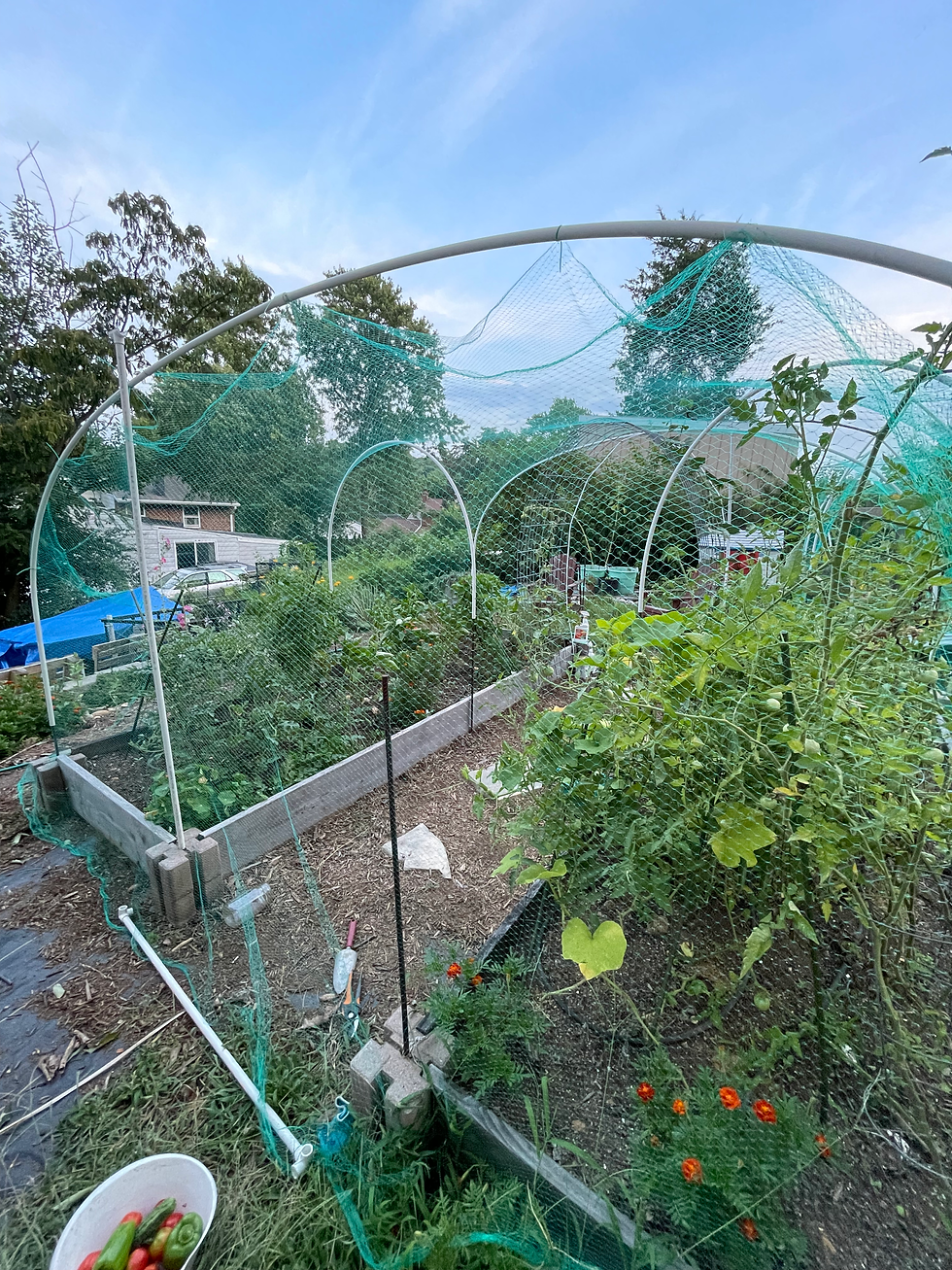
The pros: Using the "open tunnel" layout with netting was much easier in terms of setting up the net, maintaining it, and accessing the garden beds with more ease. Once you were in, there was less mess.
The cons: Tending to the outer edges of the boxes was still cumbersome, and they tended to get less attention.
Using bird netting as a canopy
In the spring of 2025, we decided to try something new. Using the longest PVC poles we had from the past few years, we stood them straight up on the rebars and capped the edges with water bottles. Throughout the garden, these PVC pipes held up a 50' x 50' canopy that we dubbed "the circus". We also laid patio stones to help prevent weeds and bring some more aesthetic to the space.

The pros: By far the easiest to install, the easiest to maintain, and the easiest to garden around. Every foot of the garden was accessible, and once you were in, you were in. There was very little interraction with the netting.
The cons: because we did not tape off the water bottles at the tops of the PVC pipes, we had several hornet nests that had to be dealt with. It was great for pollination, but very risky with kids. Secondly, 50 square feet of netting was more than we needed, so the excess was often tangled up with leaves and twigs.
So what's next?
The canopy method has definitely been the best garden cover design to date. Having all of the garden beds under one "roof" led to more productive gardening, less maintenance, and an easier fall take-down. We will still be pretty satisfied if we end up putting the canopy back up in the spring. That said--a fully fenced garden is starting to feel like more of a financial reality every day. As supplementing our grocery bill, garden consulting, and selling products through Facebook Marketplace continue, the fencing may just pay for itself!
Let us know in the comments--how do you cover your gardens?

Comments